Last updated: September 2026
Quick answer
Stamped concrete is poured concrete pressed with patterns and colored to look like stone, slate, brick or wood plank. It has fewer seams than pavers, but it needs a good base, careful joint layout and periodic sealing. Happy Valley Concrete installs stamped and decorative concrete on patios, walkways and driveway aprons in Happy Valley, Clackamas County and the Portland metro area. Call (503) 782-6069.
What stamped concrete is
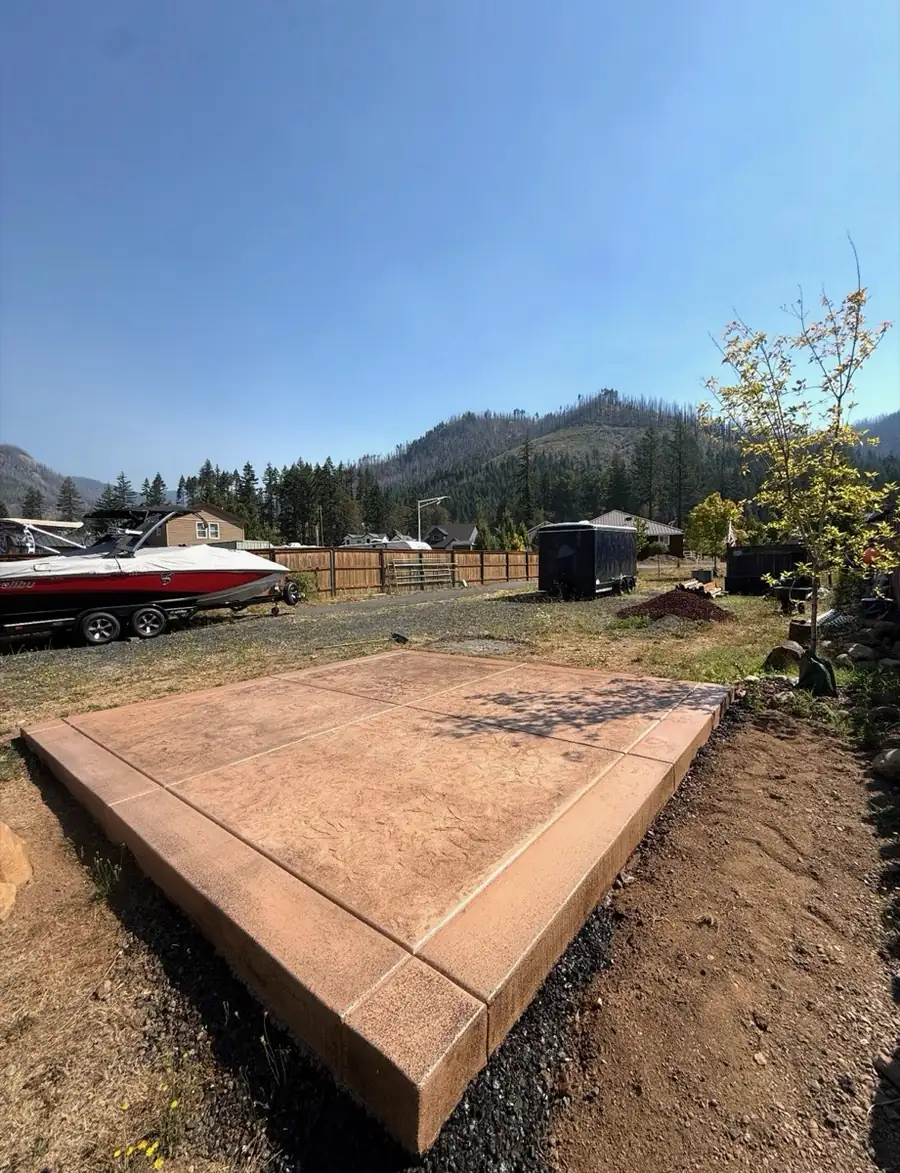
Stamped concrete starts like any other slab: excavation, compacted rock base, forms, reinforcement and a pour. While the surface is still workable, textured mats or stamps are pressed into it to create the pattern of stone, brick, slate, cobblestone or wood plank. Color is added either mixed through the concrete (integral color), dusted on the surface, or applied later as a stain. A release agent gives natural-looking tonal variation, and the finished surface is sealed.
Pattern and color options
Patterns run from classic stone and slate to brick, cobblestone and wood plank, plus more modern geometric layouts. Color can be a single tone or layered for a more natural look, often with a contrasting border. Earth tones are popular in the Pacific Northwest because they blend with landscaping and hide the dirt and needles that fall on a shady patio. Bring photos of your home's siding, roof and existing hardscape to the estimate so we can talk through colors that fit.
Where stamped concrete works best
Stamped concrete shines on patios and front entry walkways, places where you see and touch the surface up close. It can also be used on decorative driveway aprons or borders. Because the pattern is imprinted rather than assembled, there are no joints between stones for weeds to grow in, and the surface does not shift or need re-leveling the way pavers sometimes do.
Base prep matters even more with decorative work
A pattern does not make a slab stronger. Stamped concrete needs the same compacted base, thickness and reinforcement as any other slab, and a joint plan that puts control joints where they will disappear into the pattern. When decorative concrete cracks along a random line, it is highly visible. We plan the layout before the pour so joints follow pattern lines wherever possible.
Sealing and maintenance in a wet climate
Sealer protects the color and the surface from moisture, UV and stains, and it needs refreshing over time, typically every few years depending on wear and exposure. Shady, damp stamped patios can develop moss or algae, and the right cleaning approach is gentler than the pressure washer some homeowners reach for. Winter ice-melt choices matter too, since aggressive salts can damage decorative surfaces. See our wet-climate concrete guide for details.
Stamped concrete or pavers?
Both can look excellent. Stamped concrete has a continuous surface and usually costs less than pavers nationally, but repairs are harder to hide. Pavers are individual units that can be lifted and reset, and Happy Valley Concrete also installs them as part of FD Hardscape. Our stamped concrete vs pavers guide compares them side by side, and the concrete patios page covers both. For national price ranges, see the cost guide.
Choosing a pattern and color that suits your home
The best stamped patterns echo something already on the property: the color of the roof, the stone on a chimney, the tone of the siding. Large-format stone and slate patterns tend to look natural and hide minor differences. Brick and cobblestone patterns suit traditional homes, while wood-plank looks work well near a deck or a garden. Keep color in the mid-tones if the patio is in full sun, because very dark colors get hot underfoot and pale colors show every leaf stain. Look at any color sample outdoors, in the light you will actually have, before you decide.
Planning for shade, leaves and Oregon rain
A decorative surface in a shady, tree-covered yard needs a plan for organic debris. Needles and leaves leave tannin stains on light-colored concrete, and constant dampness invites moss. A matte or slightly textured sealer gives better traction than a high-gloss one. Sweeping regularly, keeping gutters and downspouts directed away, and trimming branches to let sun reach the surface do more for appearance than any product.
What to expect at the estimate and during the pour
At the estimate we look at the area, discuss pattern, color and border, and talk through how the slab connects to the house, steps and any existing concrete. On pour day the sequence is tight: the concrete is placed, color and release agent are applied, and stamps are pressed within a limited window, so the crew and the weather need to cooperate. Stamped work is scheduled for workable days, and we will say honestly when a forecast means it should wait.
Frequently Asked Questions
Does stamped concrete crack?
Any concrete can develop shrinkage cracks. Proper base prep, reinforcement and control joints laid out to follow the pattern reduce visible cracking, but no outdoor slab is completely crack-proof.
How often does stamped concrete need to be resealed?
It varies with sun, shade, traffic and the sealer used, but many stamped surfaces are resealed every few years. Shaded, wet areas may need more attention.
Is stamped concrete slippery when wet?
It can be if sealed with a glossy product. A slip-resistant additive or a matte sealer improves traction, which is worth discussing for any surface that stays wet in winter.
Related services
Helpful guides
Ready to talk about your project? Call or text (503) 782-6069, Monday to Saturday, 7:00 AM to 8:00 PM, or use the free quote form.
Call (503) 782-6069