
Last updated: September 2026
Quick answer
A good concrete bid spells out five things: excavation and compacted base, slab thickness, reinforcement, a joint plan, and cure and finish. No outdoor slab is crack-proof, so a fair warranty covers workmanship within the agreed scope and lists its exclusions. Use this page as a checklist when comparing bids. Call (503) 782-6069 for a site visit.
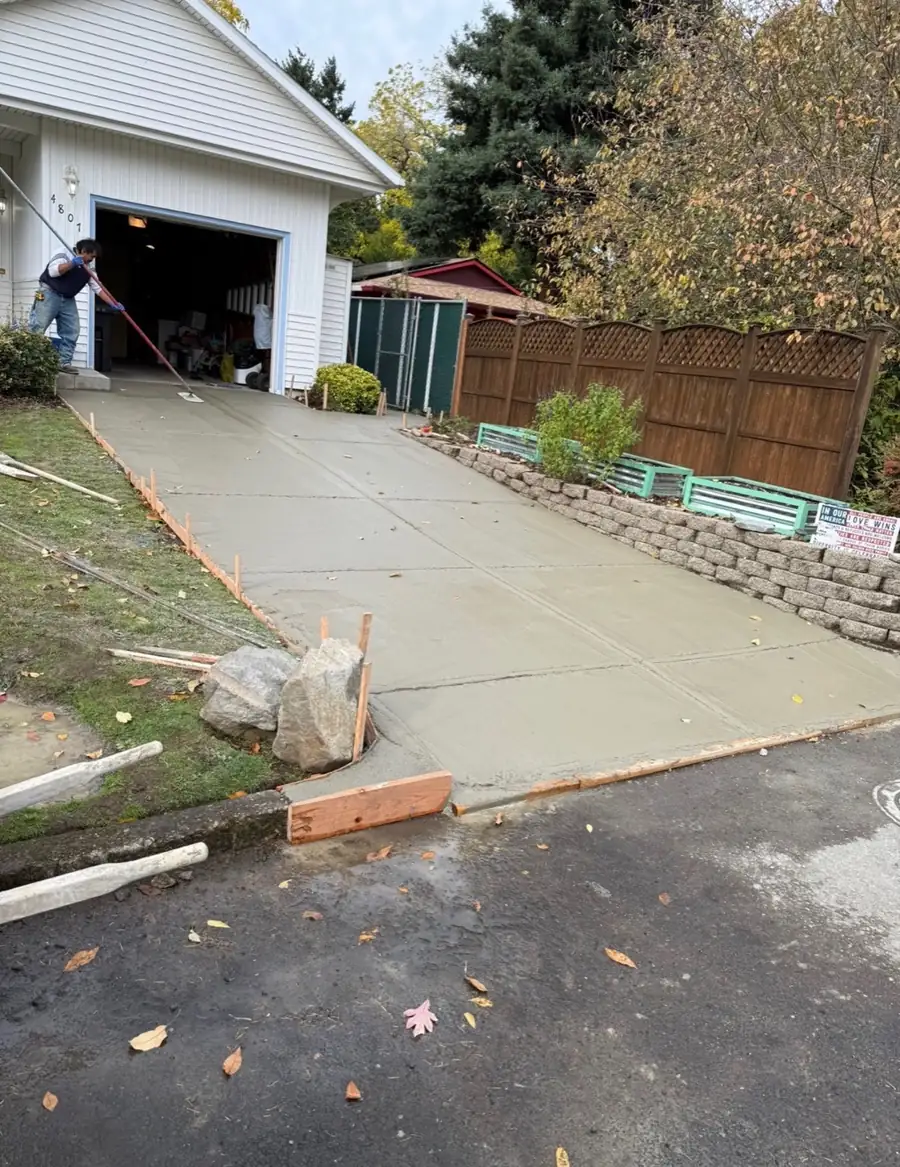
Portland metro weather meets residential flatwork
Happy Valley and Clackamas County homes sit on hillsides, clay soils and a wet-winter climate that exposes weak concrete work quickly. Rain delays, soft subgrades and freeze-thaw at elevation all matter. Decorative finishes without proper base or jointing look fine in July and disappoint by March. We scope prep openly because warranty conversations after the fact rarely fix a slab that was poured on an unstable base.
Our residential concrete process
1. Site and drainage review
We check grades, downspouts, retaining conditions and access. Hillside lots often need extra attention so water does not undermine edges.
2. Excavation and compacted base
Depth and compaction are called out so thickness is real, not theoretical. Export of spoil and formwork quality belong in the estimate, not as day-of extras.
3. Reinforcement and control joints
Mesh, rebar or fiber, as specified, paired with a joint plan. Joints are where concrete is allowed to crack neatly, and we explain panel sizes so the finished look matches structural needs.
4. Pour, finish and cure
Oregon shoulder seasons can be cool and damp; summer can dry surfaces too fast. Finish type (broom, smooth, stamped) and cure guidance are part of handoff, and vehicle and furniture timelines are stated clearly.
5. Walkthrough
Edges, joints and drainage away from the slab are reviewed before we close out. Sealer schedules for decorative work are explained so UV and winter products do not surprise you.
Warranty expectations (honest concrete language)
No outdoor slab is crack-proof. Shrinkage hairlines can occur in quality work. Agreements should focus on workmanship within the agreed scope (thickness, grade and finishing) and should clarify exclusions such as overload, chemical abuse, plow damage and site drainage changes after installation.
- Workmanship: defects clearly tied to placement or finishing errors are addressed per the written terms.
- Investigation: significant settlement or structural cracking is reviewed against the prep the contractor controlled.
- Owner role: sensible ice-melt choices, avoiding overload on thin patio sections and following cure rules protect your investment.
Warranty terms are in your written agreement. Ask every contractor, including us, to put them in writing before you sign.
Line items a fair bid should show
Line-item bids should show excavation, base, thickness, reinforcement, finish and joints, plus demolition and haul-off, drainage work, who handles permits, and cure and sealing instructions. Lump-sum mysteries hide thin slabs. Send this page to other contractors and ask them to match the checklist, then compare. Our cost guide explains what moves price, using national ranges only.
Hillside drainage and edge protection
Many Happy Valley lots shed water toward driveway edges. Ask whether regrading, drains or thickened edges belong in the scope. Ignoring drainage turns a beautiful pour into a settlement investigation later, and drainage fixed after the fact is rarely a warranty item when the original bid excluded earthwork beyond the slab footprint. Clarity on day one is cheaper than arguments in year three.
HOA and realtor notes
Many neighborhoods have appearance standards for driveways and walkways. Bring HOA guidelines to the estimate so color and texture are approved before forms go in. Realtors preparing listings can share this page with buyers who want to understand replacement timelines before closing.
Decorative finishes and winter products
Stamped and colored concrete need sealer maintenance and careful ice-melt choices. Aggressive salts can frost decorative surfaces. See stamped concrete and the wet-climate guide.
After the pour: first-year watch-outs
Monitor drainage after the first heavy rains. Keep heavy equipment off young slabs until cleared. If an unexpected crack appears, photograph it and call (503) 782-6069. Many hairlines are normal shrinkage, but early photos help distinguish cosmetic from structural concerns. For the full sequence of a project, read how a concrete project works.
Frequently Asked Questions
What does a concrete workmanship warranty usually cover?
Typically defects tied to placement or finishing within the agreed scope, with exclusions for overload, chemicals, plow damage and drainage changes after installation. Your written agreement controls.
Is a hairline crack a warranty problem?
Usually not. Hairline shrinkage cracks are normal. A widening crack or a settled panel deserves a photo and a call.
What should I ask a contractor before signing?
Thickness, base depth, reinforcement, joint plan, demolition, drainage, permit responsibility, cure instructions, warranty terms, and license and insurance status, all in writing.
Related guides
Our services
Ready to talk about your project? Call or text (503) 782-6069, Monday to Saturday, 7:00 AM to 8:00 PM, or use the free quote form.
Call (503) 782-6069