Last updated: September 2026
Quick answer
In the Portland area, water is the main enemy of concrete. Long-lasting flatwork comes from a compacted rock base, a slight slope so water leaves the slab, air-entrained concrete where freezing is possible, control joints, and sealing or cleaning suited to shade and moss. Avoid harsh de-icers on new concrete. Questions: (503) 782-6069.
Why our climate is hard on concrete
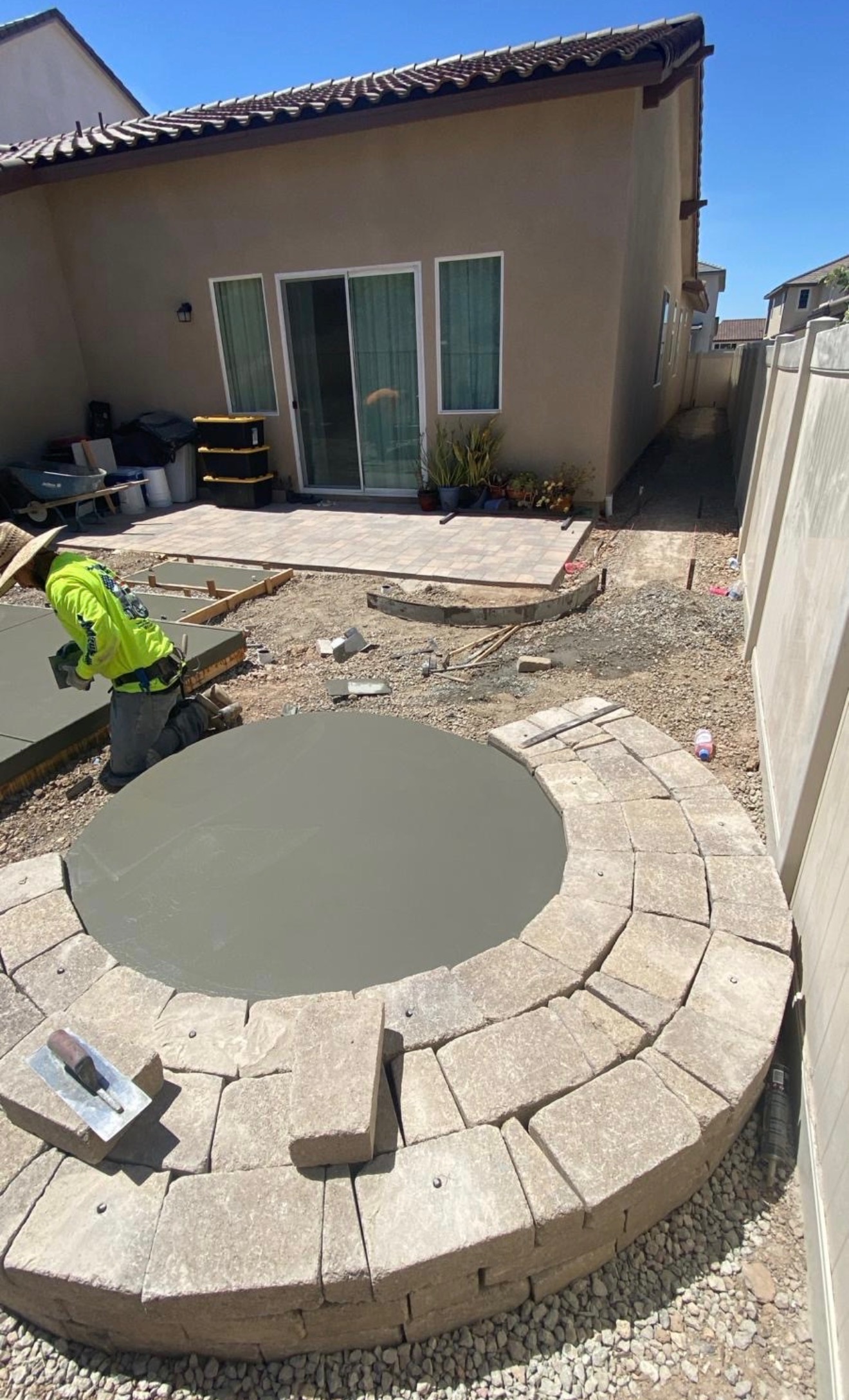
Around Happy Valley and Portland, the challenge is not extreme cold but months of steady rain, saturated soil, and occasional freezes that arrive when the ground is already wet. Wet soil is soft soil, and a slab on a soft base settles. Water that sits on the surface grows moss and algae. When water in the concrete freezes and thaws repeatedly, the surface can flake (a problem called scaling). Most winter concrete failures here trace back to water: it got under the slab, into the surface, or sat where it should have drained.
Drainage comes first
Every concrete surface should slope slightly away from the house and shed water instead of holding it. Downspouts should discharge somewhere that is not onto or against the slab. On hillside lots like many in Happy Valley, runoff from above should be directed around, not across, a driveway or patio. In areas with clay soil, a layer of compacted crushed rock under the slab gives water somewhere to go and keeps the slab from sitting in mud. We review grade and water flow before forms go up.
The base under the slab
Compacted crushed rock is the most important part of a slab you never see. It drains, supports the load, and interrupts the moisture that would otherwise rise from wet clay. Thin or poorly compacted base is why some driveways settle at the edges or crack within a few winters. Ask contractors what depth of base rock they use, what it is compacted with, and how they handle soft spots.
Freeze-thaw and air-entrained concrete
Where concrete can freeze while wet, such as at higher elevations near Sandy or on an exposed patio, specifying air-entrained concrete helps. The microscopic air bubbles give freezing water room to expand without cracking the surface. It is common for exterior flatwork in cold climates. Also avoid finishing or placing concrete when a hard freeze is forecast, and protect fresh concrete in cold weather. Ask us about the mix for your site. See Sandy for higher-elevation notes.
De-icing chemicals and snow
Rock salt and other de-icers increase the damage freeze-thaw does to the surface, and are especially hard on new or decorative concrete. Many contractors recommend avoiding any de-icing chemical during the first winter, and avoiding products with ammonium nitrate or ammonium sulfate at any time. Sand gives traction with no chemical effect, and shoveling early keeps ice from bonding.
Moss, algae and slippery surfaces
Shade plus moisture equals moss and algae, and they make concrete slick. Prevention includes trimming back overhanging branches to let sun and air reach the surface, keeping gutters clear, and making sure the surface drains. To clean, start with a stiff brush and a mild cleaner made for concrete and rinse thoroughly; a high-pressure washer can etch the surface if used carelessly, especially on stamped or exposed-aggregate finishes. A textured broom finish improves traction on walkways and steps.
Sealing: when it helps and when it does not
Plain broom-finish driveways are often left unsealed in this area, though some owners apply a penetrating sealer for stain resistance. Stamped and colored concrete is normally sealed and needs resealing every few years to protect color and resist moisture. Use a sealer appropriate to the surface, and on walkways and steps choose a slip-resistant finish. Never seal over damp concrete or a surface that is still shedding moisture. If your project is decorative, see stamped concrete and stamped concrete vs pavers.
Crack and joint care
Concrete shrinks slightly as it cures, so some hairline cracks are normal. Control joints tell it where to crack. Keep joints and cracks sealed with an appropriate flexible sealant so water does not get underneath, and watch for a crack that is widening or a panel that is dropping. A widening crack or a settled panel is usually a base or drainage issue, and worth a call: (503) 782-6069. Related pages: driveways, patios, walkways and prep and warranty.
Frequently Asked Questions
How do I stop moss from growing on my concrete?
Increase sun and airflow by trimming branches, keep gutters clear, make sure the surface drains, and clean with a stiff brush and a concrete-safe cleaner. A textured finish helps traction.
Is a pressure washer safe on concrete?
It can be if used carefully on a plain slab, but high pressure can etch or damage stamped, colored or exposed-aggregate finishes. Use lower pressure and a wide tip, or a brush.
Should I seal my concrete driveway?
Plain driveways are often left unsealed, while stamped and colored concrete is normally sealed and resealed every few years. Never seal damp concrete.
Can I use rock salt on my new concrete?
It is best to avoid de-icing chemicals on new concrete, especially in the first winter. Sand gives traction without damaging the surface.
Why did my driveway settle at the edge?
Usually the base or drainage is the cause: soft or thin base, saturated soil, or water flowing at the edge. The fix addresses the water and base, not just the surface.
Does freeze-thaw really matter in the Portland area?
Less than in colder regions, but occasional freezes on wet concrete can scale the surface, especially at higher elevations. Air-entrained concrete and good drainage reduce the risk.
Related guides
Our services
Ready to talk about your project? Call or text (503) 782-6069, Monday to Saturday, 7:00 AM to 8:00 PM, or use the free quote form.
Call (503) 782-6069