
Last updated: September 2026
Quick answer
A residential concrete project runs in this order: free estimate, written scope, permit and utility check (call 811), site prep and excavation, compacted base, forms and reinforcement, pour and finish, cure, joints, and a final walkthrough. Permits depend on your address and project, so confirm with your city or county. Call (503) 782-6069 to start.
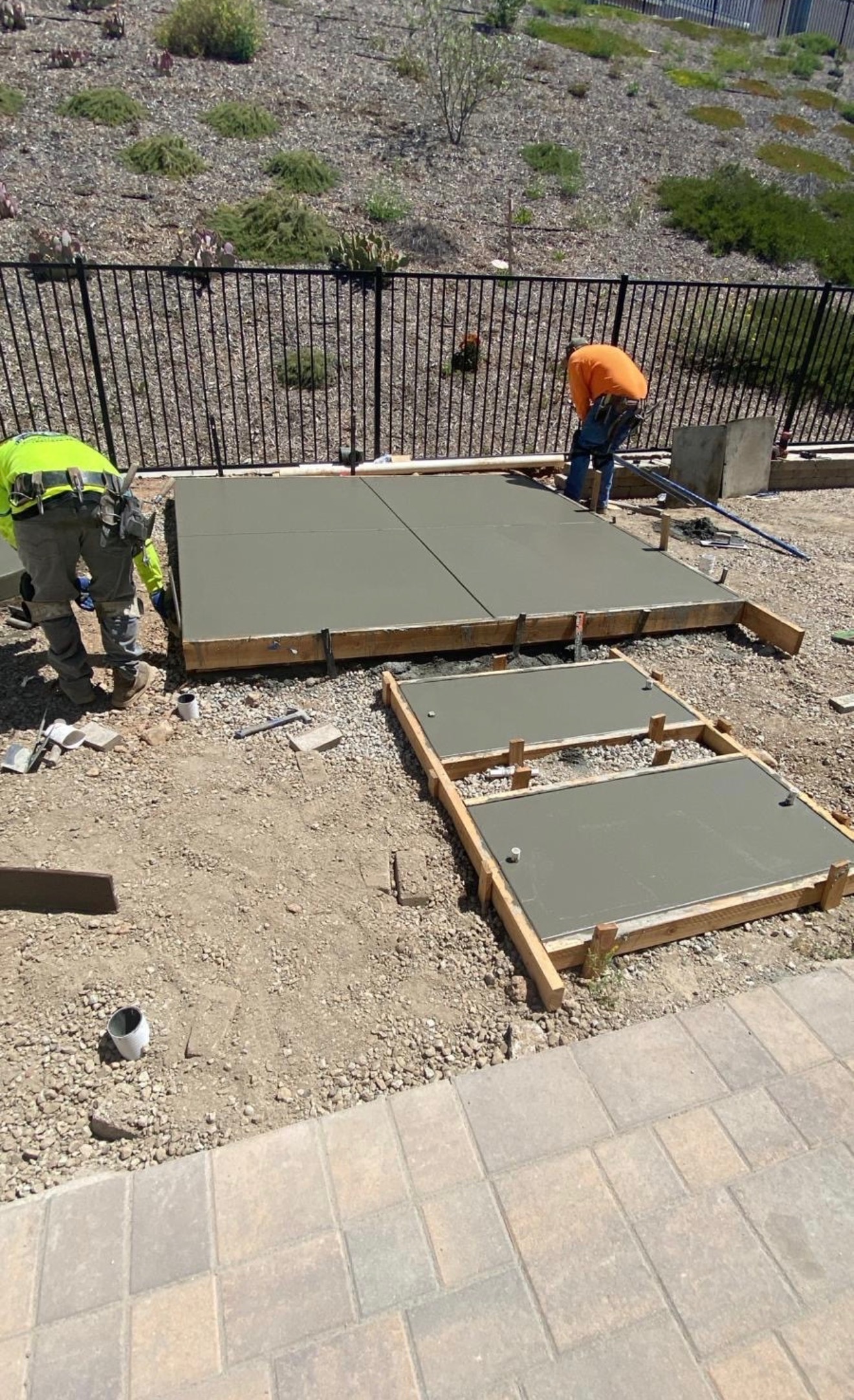
The steps, in order
- Request a free estimate. Call (503) 782-6069 or use the quote form with your city, project type, approximate size and photos.
- On-site visit and written scope. We look at grade, water flow, access and existing concrete, and write a scope covering thickness, base, reinforcement, finish, demolition and drainage.
- Check permits, HOA rules and utilities. Ask your city or county what applies to your address, get HOA approval if needed, and call 811 before any digging so underground utilities are marked. Note septic, wells and irrigation lines.
- Schedule around weather. Pours are scheduled for workable weather. Heavy rain or a hard freeze can move the date so the concrete is not compromised.
- Demolition and excavation. Old concrete is removed and hauled away, and the area is excavated to the depth needed for the base and slab.
- Compacted base and forms. Crushed rock is placed and compacted, and forms are set to the planned shape, height and slope for drainage.
- Reinforcement. Rebar or wire mesh is placed and supported at the right height, and joint locations are marked.
- Pour and finish. Concrete is placed, leveled and finished, with a broom, exposed-aggregate or stamped finish as agreed, and edges are tooled.
- Cure, cut joints and walkthrough. Control joints are cut, cure protection is applied, and we review edges, joints and drainage with you and explain when you can walk, drive and place furniture on it.
Do I need a permit for concrete work?
It depends on the project and the address, and we cannot decide that for you. As a general guide, a patio or backyard walkway on private property often does not need a building permit, while work in the public right-of-way (sidewalks, curbs, driveway approaches), retaining walls over a certain height, grading in sensitive areas, and commercial foundations commonly do. Rules differ between cities such as Happy Valley, Portland, Gresham, Milwaukie, Oregon City, Lake Oswego and West Linn, and unincorporated Clackamas County addresses use the county. Ask the local building or public-works department before work starts, and ask your contractor in writing who is responsible for pulling any permit.
Call 811 before you dig
Oregon requires notifying the Oregon Utility Notification Center before excavation. Dial 811 or use the free online service a few business days ahead so underground lines are marked at no charge. It protects the crew and your utilities, and it is required for any excavation project.
Timeline: what to expect
A typical residential driveway or patio is excavated, based and formed in one to two days and poured on the next, but scope, weather and access change that. Concrete is usually walkable within a day or two and drivable after about a week, and it continues to gain strength for weeks. We give a schedule specific to your job. Rain and freezes shift dates more than anything else, and a good contractor will move a pour rather than pour in bad conditions.
What you can do to help
Mark sprinkler heads and any buried lines, move vehicles and furniture, tell us about septic systems, HOA rules and neighbors' access concerns, and keep pets and kids off the forms and fresh concrete. Decide on color and finish before the day of the pour, since it cannot be changed afterwards.
After the pour
Keep vehicles and heavy loads off until we say so, water and weather protection may be recommended in the first days, and avoid de-icers and harsh chemicals in the first winter. Photograph any early cracks and call us; many hairlines are normal shrinkage, but photos help sort cosmetic from structural. See the wet-climate guide and prep and warranty expectations.
Where to go next
See concrete driveways, patios, walkways, the cost guide, or the places we serve.
Frequently Asked Questions
Do I need a permit to pour a concrete patio in Oregon?
Often a simple backyard patio does not need a building permit, but it depends on the city or county, the size and the site. Ask your local building department for your address.
Do I need to call 811 before a concrete project?
Yes. Any excavation should be preceded by a free 811 request so underground utilities are marked.
How long before I can walk or drive on new concrete?
Foot traffic is usually fine in a day or two, and vehicles typically wait about a week, with heavier loads longer, depending on mix and weather.
What happens if it rains on pour day?
We may reschedule. Pouring in heavy rain can compromise the surface and strength.
Who pulls the permit, me or the contractor?
It varies by project and agreement. Ask each contractor to state in writing who is responsible.
Related guides
Our services
Ready to talk about your project? Call or text (503) 782-6069, Monday to Saturday, 7:00 AM to 8:00 PM, or use the free quote form.
Call (503) 782-6069